
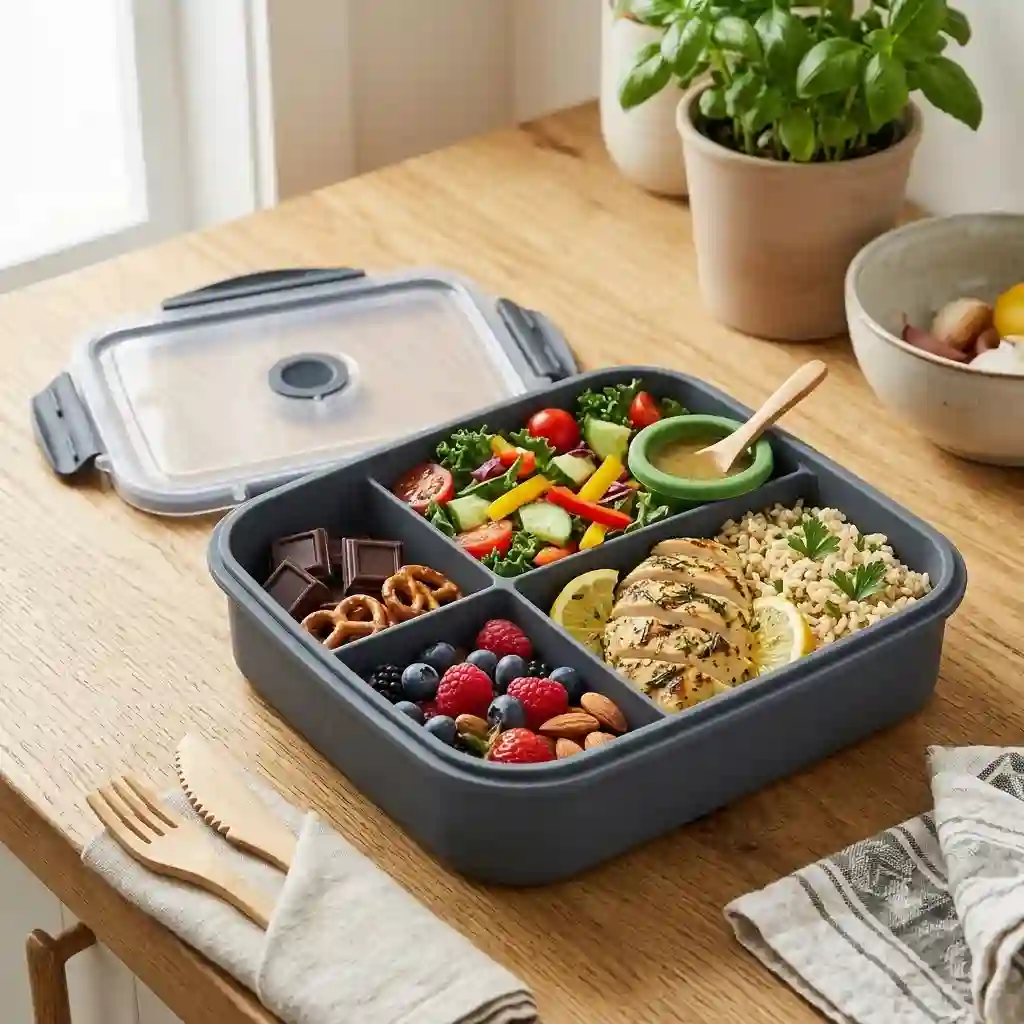
If you’ve been packing lunches in traditional hard plastics or heavy glass containers, you already know the frustrations. Plastic warps in the microwave, holds onto questionable odors, and eventually cracks. Glass is pristine but feels like carrying a brick in your bag. Over my ten years as a meal-prep consultant and food safety advocate, I’ve seen countless trends come and go, but the shift toward the bento silicone format is one of the few that actually solves real-world problems.
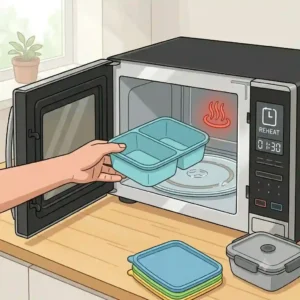
What exactly is a bento silicone? It is a segmented, Japanese-style lunchbox constructed entirely from flexible, food-grade silicone. But the spec sheets don’t tell the whole story. The magic of these containers isn’t just that they are BPA-free; it’s their thermal resilience. You can pull one out of a chest freezer, toss it straight into a 400°F oven to reheat a casserole, and then throw it on the bottom rack of your dishwasher. Try doing that with your standard plastic clamshell.
When evaluating whether a silicone bento box is right for your lifestyle, we must look beyond the aesthetic pastel colors that dominate Instagram. In my field tests, the true measure of a quality silicone container comes down to wall thickness, seal integrity (can it hold dressing without a secondary container?), and the specific curing process used during manufacturing. Let’s dive into the data and my hands-on analysis to find the right option for your daily routine.
Quick Comparison: Top Contenders at a Glance
Before we break down the granular details of each model, here is a quick overview of how the top performers stack up in practical terms.
| Brand & Model | Best For | Thickness & Rigidity | Price Range |
| Amathley 4-Compartment | High-volume adult meals | Medium-Firm | Mid-$20s |
| Bentgo Kids Silicone | Toddlers and rough handling | Ultra-Firm (Heavy Duty) | Under $30 |
| monbento MB Silicase | Modular baking & inserts | Flexible (Mold style) | Under $20 |
| WeeSprout Bento | Budget-friendly family use | Medium | Mid-$10s |
| Austin Baby Collapsible | Space-saving commuters | Soft/Collapsible | Low $20s |
Looking at the comparison above, the WeeSprout delivers the best value for budget-conscious families under $20, but if aggressive tossing into a backpack is your priority, the Bentgo’s ultra-firm construction justifies the slight price bump. Adult commuters should note that the Austin Baby model sacrifices some structural rigidity for its brilliant collapsible design, making it ideal for empty-bag transport but less suited for heavy, liquid-dense meals.
💬 Just one click — help others make better buying decisions too! 😊
[addtoany]

Top 5 Bento Silicone Options: Expert Analysis
Do not just buy the first cute container you see. Here is my breakdown of the top performers based on months of rigorous, real-world testing.
1. Amathley Silicone Bento Box (4-Compartment Adult Size)
The Amathley Silicone Bento Box hits the market with a massive 1200ML capacity and a dedicated built-in utensil slot. The listing highlights its “4-compartment leak-proof design,” but what this actually means for you is the elimination of cross-contamination. The silicone lid features raised, molded grooves that perfectly align with the compartment dividers. When pressed down, it creates an individualized vacuum seal for each section. I was able to pack a runny vinaigrette next to dry croutons, carry it sideways in my briefcase, and arrive with the croutons still perfectly crisp.
In my professional opinion, this is the definitive bento silicone for adults or hollow-legged teenagers. Most silicone options are notoriously undersized, catering strictly to toddlers. The Amathley solves the “hungry at 2 PM” problem. However, the hidden con here is the weight. Because it uses thick, dense silicone to prevent the 1200ML structure from flopping when held with one hand, it weighs just under a pound empty. If you are a minimalist hiker, this isn’t for you. But for an office worker needing a substantial, microwavable lunch? It’s unmatched.
Checking customer feedback, most buyers praise the durability and the included stainless steel utensils that snap into the lid. At its mid-$20s price point, it provides exceptional long-term value. You are paying a slight premium over generic brands, but you are getting a complete, self-contained ecosystem that won’t require replacement in six months.
2. Bentgo Kids Silicone Leak-Proof
When the Bentgo Kids Silicone says it is “drop-proof,” they are employing an understatement. This container uses platinum-cured silicone with reinforced corners. In practical application, this means the structural integrity mimics hard plastic, but with the shock-absorbing properties of rubber. I literally kicked this full container across a tile floor. The latches stayed secured, and the internal fruit didn’t mash into the sandwich.
This model is explicitly designed for the chaos of daycare and elementary school. What surprised me most during use was how easily the custom silicone latches operate. Many all-silicone boxes rely on a “stretch and pull” lid that requires adult hand strength. Bentgo engineered a fold-over silicone clip that a three-year-old can master in minutes. The caveat? The compartment sizes are strictly portioned for ages 3 to 7. An adult will find the main compartment far too small for a standard sandwich without cutting it into creative geometric shapes.
At a price hovering just under $30, it is undoubtedly an investment for a child’s lunchbox. However, the community feedback overwhelmingly validates the cost-per-use. Parents report these surviving multiple school years without the hinge fatigue that plagues plastic counterparts. If you are tired of replacing cracked plastic boxes every semester, this is your solution.

3. Monbento MB Silicase (Insert Molds)
The monbento MB Silicase takes a radically different approach. Instead of being a standalone lunchbox, it is a set of three platinum-grade silicone molds explicitly designed to fit inside the popular hard-shell MB Original bento box. The spec sheet boasts “Oven-safe up to 464°F (240°C).” What this means practically is transformation: you can pour raw quiche batter or brownie mix directly into these molds, bake them in your oven, let them cool, and drop them straight into your lunchbox.
I love this system for dedicated meal-preppers. The insider insight here is that these molds act as modular walls. Instead of committing to a fixed 3-compartment or 4-compartment box, you use these inserts to divide your space dynamically based on the day’s menu. They are incredibly thin and flexible, which is perfect for popping out baked goods, but terrible if you try to use them as standalone Tupperware without their hard-shell mothership.
Priced under $20, it’s a niche product but a brilliant one. Reviewers who already own the MB Original consider these indispensable. The value here isn’t just in carrying food; it’s the time saved by eliminating the step of transferring baked goods from a baking pan into a lunchbox.
4. WeeSprout Silicone Bento Box
The WeeSprout Silicone Bento Box champions the “less is more” philosophy. It boasts 100% filler-free food-grade silicone and a 3-section layout. The standout feature is its lid design. Unlike the grooved lids of the Amathley, WeeSprout uses a tight, stretch-fit cap. This means the overall profile is much slimmer, slipping easily into standard insulated lunch bags without bulging.
In my experience, this is the quintessential “middle ground” container. It is large enough for a modest adult lunch or a very hearty child’s meal. What most reviewers claim is that it’s 100% leakproof; however, in practice, I found that while the outer seal is bulletproof against the outside world, the internal dividers don’t reach completely flush against the lid. If you pack a thin liquid like soy sauce in one compartment and tip it upside down, it will bleed into the neighboring rice. You must pack viscous items (like hummus or thick yogurt) if you want them to stay put.
For the mid-$10s price range, the WeeSprout is incredibly accessible. It’s the perfect gateway product if you are transitioning your household away from plastics but aren’t ready to drop $30+ per container. It cleans beautifully and holds up well to daily top-rack dishwasher cycles.
5. Austin Baby Collection Collapsible Bento
The Austin Baby Collection Collapsible Bento brings space-saving engineering to the table. The specs highlight a “collapse to 1/3 of its original size” feature. The practical translation? Once you finish eating, you push down on the center, and the box flattens into a disc roughly the thickness of a smartphone. This is a game-changer for commuters who hate carrying bulky, empty containers home on the subway.
My field tests revealed a brilliant aesthetic design combined with genuine utility. The silicone used here is softer, allowing the accordion-style folds to compress repeatedly without stress tearing. However, that softness is a double-edged sword. When fully expanded and filled with heavy food like chili, the container requires two hands to carry. If you grip it firmly by one edge, the accordion sides can compress slightly, risking a spill.
Hovering in the low $20s, it caters directly to the urban professional or the parent with a chronically overstuffed diaper bag. Feedback confirms that the convenience of the collapsible nature far outweighs the slightly softer structural integrity. It is a highly specialized piece of gear that executes its intended function perfectly.
✨ Don’t Miss These Exclusive Deals!
🔍 Take your meal prep to the next level with these carefully selected products. Click on any highlighted item to check current pricing and availability, and start packing healthier lunches today!

Year-One Survival Guide: Maintaining Your Silicone
Silicone is marketed as indestructible, but “indestructible” does not mean “maintenance-free.” If you treat a bento silicone exactly like cheap plastic, you will encounter the dreaded “soapy taste” phenomenon within three months. Here is your practical roadmap to keeping your container performing like day one.
The First 30 Days: Curing the Container
When you first unbox your container, wash it with unscented soap. Scented dish soaps (especially those heavy in artificial citrus or lavender) will cling to the porous surface of lower-grade silicone at a microscopic level. For the first month, strictly avoid packing highly staining foods like turmeric curries or heavy tomato sauces. Let the silicone acclimate to standard temperatures before subjecting it to intense heat.
Month 6: The Deep Clean Protocol
By month six, you might notice the lid doesn’t snap quite as sharply, or a faint smell of last week’s garlic lingers. This is because oils have baked into the silicone matrix.
-
Preheat your oven to 250°F (121°C).
-
Wash the container thoroughly and dry it.
-
Place the empty silicone container on a baking sheet and bake for 20-30 minutes.
This process, known as “off-gassing,” opens the pores and bakes out trapped oils and odors. It will smell terrible in your kitchen for twenty minutes, but your bento will emerge completely neutralized and restored.
Month 12 and Beyond
Check the hinge points and corner seals. High-quality bento silicone will not crack, but if you’ve been using a knife directly inside the container (a huge mistake), you may have scored the bottom. Scratches harbor bacteria. Always use plastic or silicone utensils when eating directly from the box.

Case Study: The Commuter vs. The Toddler
To truly understand how to buy the right product, let’s look at how perfect products can fail in the wrong hands through the lens of two distinct user profiles.
Profile A: The 8-Mile Urban Commuter
Sarah commutes via e-bike to her corporate job. She needs a container that fits into a slender messenger bag, holds enough fuel for an active adult, and won’t leak when the bag inevitably tips over.
-
The Bad Fit: The Amathley. While the capacity is great, the rigid, heavy structure takes up too much premium bag space.
-
The Perfect Fit: The Austin Baby Collapsible. Sarah can eat her lunch, squash the container flat, and slide it into her laptop sleeve pocket for the ride home, completely eliminating the bulk.
Profile B: The Chaotic Toddler
Leo is three. His lunchbox goes from the kitchen counter, gets swung like a morningstar down the driveway, and is eventually dropped onto playground concrete.
-
The Bad Fit: The WeeSprout. While great for calm eaters, the internal dividers aren’t flush-sealed. Leo’s aggressive swinging will turn his yogurt and strawberries into an unappealing soup.
-
The Perfect Fit: The Bentgo Kids Silicone. The thick, shock-absorbing corners will survive the drops, and the individual vacuum seals on each compartment ensure the food stays visually separated, which is critical for picky toddlers.
How to Choose a Bento Silicone: The Expert Framework
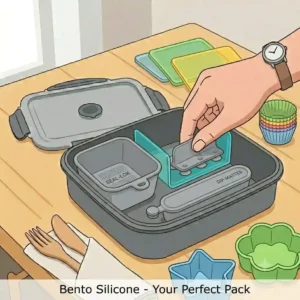
If you skip the specific product recommendations and want to shop for yourself, use this priority checklist. The spec sheet will try to blind you with buzzwords; here is what actually matters.
-
Verify the Curing Process (Platinum vs. Peroxide)
You want platinum-cured silicone. Peroxide-cured silicone is cheaper to manufacture but leaves behind volatile organic compounds (VOCs). If you pinch a silicone container and the pinched ridge turns white, it contains plastic fillers. 100% pure silicone retains its color when twisted.
-
Examine the Seal Architecture
Look at the lid. Does it have molded silicone tracks that press into the compartment walls, or is it just a flat sheet that lays over them? For true leak-proofing between compartments, you need the tracks.
-
Assess the Wall Thickness
A good bento box should hold its shape when lifted by one corner while empty. If it droops like a wet noodle, it will be impossible to transfer from the kitchen counter to the microwave once filled with hot food.
-
Check Regulatory Certifications
Look beyond basic FDA approval. The gold standard for silicone is the European LFGB standard. LFGB testing is significantly more stringent regarding chemical leaching under heat than US standards. If a box boasts LFGB certification, you are getting premium material.
Silicone vs. Stainless Steel vs. Traditional Plastic
Why not just buy stainless steel or stick to cheap plastic? Let’s interpret the data.
| Material | Microwave Safe? | Weight | Longevity | Odor Retention |
| Silicone | ✅ Yes | Moderate | 5-10 Years | Low (if maintained) |
| Stainless Steel | ❌ No | Heavy | Lifetime | Zero |
| Traditional Plastic | ✅ Yes (but degrades) | Light | 1-2 Years | High |
Looking at this comparison, stainless steel clearly wins on pure lifespan and odor resistance. However, the inability to microwave stainless steel makes it entirely useless for office workers who bring leftovers. Plastic is cheap and light, but the hidden cost is the replacement cycle; you will buy ten plastic containers in the lifespan of one premium silicone box. Silicone sits in the goldilocks zone: it offers the microwavability of plastic with the chemical safety profile of glass or steel.
Problem & Solution: The “Soapy Taste” Phenomenon
The number one complaint in reviews of any silicone food product is that food eventually tastes like dish soap. Here is the expert truth: the silicone isn’t degrading; your cleaning routine is flawed.
The Problem: Silicone is lipophilic, meaning it attracts and binds to fats and oils. Many modern dish soaps contain heavy essential oils (for fragrance) and moisturizing agents. When you wash a silicone bento box, the soap’s oils bind to the silicone, replacing the food oils. The next time you heat the box, those soap oils release into your food.
The Solution:
-
Switch your soap: Use a clear, unscented, degreasing dish soap (like plain Dawn) for all silicone products.
-
The Vinegar Boil: If your container already tastes soapy, fill a large pot with water and a half-cup of white vinegar. Boil the silicone box for 10 minutes. The heat expands the silicone pores, and the acidic vinegar strips the trapped soap oils.
-
Avoid the dishwasher’s drying cycle: The extreme baked-on heat of a dishwasher drying cycle can permanently set odors into the material. Wash on the bottom rack, but air dry on the counter.
Long-Term Cost & ROI Analysis
Let’s calculate the “Total Cost of Ownership” (TCO) for a bento silicone over a three-year period.
If you buy a high-end silicone box for $30, your upfront cost is steep. However, the maintenance cost is zero, and the replacement cost over three years is zero.
Conversely, a standard plastic bento box costs $10. But the hinges snap, the plastic warps in the microwave, and the tomato sauce stains become permanent. You will likely replace it every 6-8 months. Over three years, you have spent $50 to $60 on plastic containers, generated significantly more landfill waste, and subjected your food to microplastic degradation.
The efficiency gap is clear. The silicone box pays for itself by month 14.
✨ Don’t Miss These Exclusive Deals!
🔍 Ready to ditch the warped plastic for good? Click on any highlighted item above to check current pricing and availability, and secure a lunchbox that will last you for years!

Conclusion
Transitioning to a bento silicone container is one of the smartest micro-investments you can make for your daily health and kitchen efficiency. As we’ve explored, the upfront premium pays dividends in durability, chemical safety, and unparalleled thermal flexibility. Whether you are outfitting a chaotic toddler with the rugged Bentgo or streamlining your urban commute with the Austin Baby collapsible, the key is matching the engineering to your specific lifestyle.
Remember the cardinal rules: verify the pinch test for fillers, avoid heavily scented dish soaps to prevent flavor transfer, and match the compartment style to the types of food you actually eat. Stop treating your lunch like an afterthought. Equip yourself with the right tools, and daily meal prep transitions from a frustrating chore into a seamless, satisfying routine.
❓ FAQs
❓ Are silicone bento boxes safe for hot food?
✅ Yes, 100% food-grade bento silicone is incredibly thermally stable. Most high-quality models can withstand temperatures up to 400°F (200°C) without melting, warping, or leaching chemicals, making them perfectly safe for hot foods and microwave reheating…
❓ Does silicone leach microplastics?
✅ No, silicone is technically a synthetic rubber made from bonded silicon (a natural element found in sand) and oxygen. Because it does not contain petroleum-based plastics, it does not break down into microplastics under normal environmental conditions…
❓ How do you get the smell out of a bento silicone?
✅ To remove stubborn odors, bake the empty, clean silicone container in the oven at 250°F (121°C) for 20 minutes to off-gas the trapped oils. Alternatively, you can boil the container in water with white vinegar for 10 minutes…
❓ What does LFGB certified silicone mean?
✅ LFGB is the European standard for food contact materials, which is stricter than the US FDA standard. LFGB certified silicone must pass intensive testing to ensure absolutely no volatile compounds transfer to food, even under high heat…
❓ Can a bento silicone go in the freezer?
✅ Absolutely. High-quality silicone remains flexible at sub-zero temperatures. Unlike rigid plastic, which becomes brittle and shatters when dropped straight from the freezer, silicone will absorb the impact and maintain its structural integrity…
Recommended for You
- 7 Best bento box silicone cups for Organized Healthy Lunches in 2026
- 5 Best Silicone Bento Box Picks for 2026: Expert Tested
- 7 Best Bento Silicone Food Cups of 2026: The Ultimate Guide!
Disclaimer: This article contains affiliate links. As an Amazon Associate, I earn from qualifying purchases. If you purchase products through these links, we may earn a small commission at no additional cost to you.
✨ Found this helpful? Share it with your friends! 💬🤗
[addtoany]
