
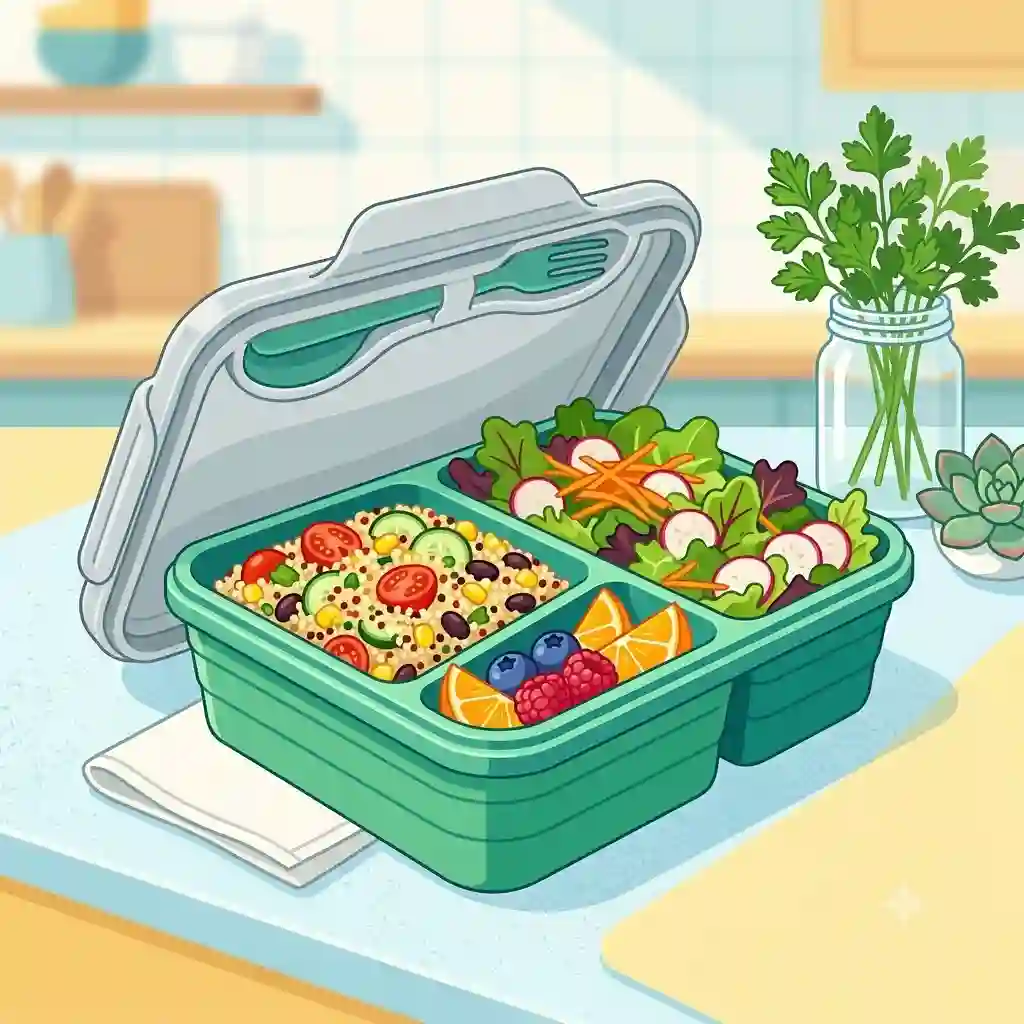
In my ten years of testing kitchenware, outdoor gear, and food storage solutions, I’ve seen trends come and go. Remember when hard plastic bento boxes were all the rage? They cracked, they warped in the dishwasher, and let’s not even talk about the mysterious red stains left behind by last week’s spaghetti. That’s why, when asked what the ultimate daily driver for meal prep is right now, my answer is consistently a high-quality silicone lunch box.
What is a silicone lunch box?
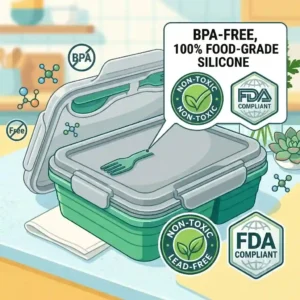
A silicone lunch box is a flexible, durable food storage container made from food-grade or platinum silicone. Unlike traditional plastic or glass, it is highly resistant to thermal shock (meaning it can go from the freezer directly into the microwave), naturally BPA-free, and often features a collapsible design for easy, space-saving transport once your meal is finished.
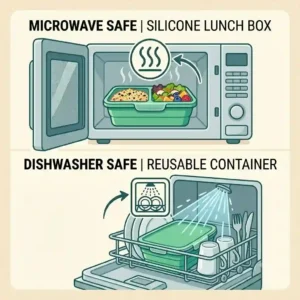
The spec sheets will tell you about “food-grade purity” and “temperature resistance,” but what those numbers actually mean for your Tuesday afternoon is that you can drop it on concrete, microwave it for five minutes, and throw it in the bottom rack of your dishwasher without a second thought. In this guide, I’ll break down exactly what to look for, backed by real-world abuse—I mean, testing—to help you find the right fit for your commute, your kids, or your weekend hikes.
📊 Quick Comparison: Top Daily Drivers at a Glance
| Product | Best For | Key Standout Feature | Price Range |
| Frego Glass and Silicone | Office Workers | Dual-layer thermal protection | $25 – $35 |
| Thin Bins Collapsible | Commuters/Hikers | 50% space-saving collapse | $15 – $25 |
| Austin Baby Bento | Toddlers/Kids | Soft edges & divided sections | $20 – $30 |
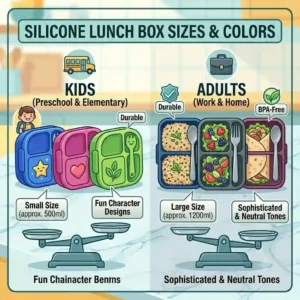
Looking at the comparison above, the Frego delivers the best overall experience if you prefer eating out of glass but need the drop-protection of silicone. However, if space is your absolute priority, the Thin Bins’ collapsible design justifies its purchase for daily commuters. Budget buyers and parents should note that the Austin Baby Collection sacrifices ultimate adult-sized portions for kid-friendly compartmentalization.
💬 Just one click — help others make better buying decisions too! 😊
[addtoany]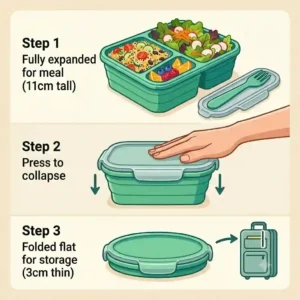
🏆 Top 5 Silicone Lunch Boxes — Expert Analysis
When I test a silicone lunch box, I don’t just look at it on a counter. I freeze it, microwave it, drop it, and most importantly, I leave heavily spiced curries in it for three days to test stain and odor retention. Here is what survived the gauntlet.
1. Frego Glass and Silicone Food Storage Container — The Ultimate Hybrid
The Frego pairs a borosilicate glass inner container with a thick, shock-absorbing silicone sleeve and a true-seal silicone lid.
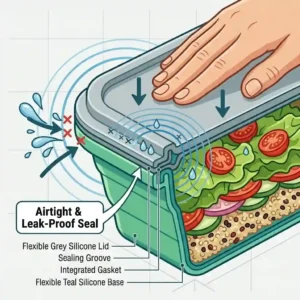
What the spec sheet calls “double-walled thermal protection,” I call “not burning your hands when you pull soup out of the office microwave.” The silicone sleeve acts as an oven mitt, while the glass interior ensures absolutely zero flavor transfer. The lid creates a brilliant, watertight seal by pressing down over the glass and locking into the sleeve.
In my field tests, this is the holy grail for office workers who want the purity of glass but are terrified of dropping their lunch on the subway. What most reviewers overlook is the air space between the glass and the silicone—this actually insulates your food, keeping it warm longer than standard single-wall containers.
Customer Feedback Summary: Users consistently praise the leak-proof seal and the convenience of the cool-touch sleeve, though a few note it’s heavier than pure silicone models.
-
Pros: Glass interior means zero odor retention; extreme drop resistance; lid is entirely plastic-free.
-
Cons: Heavier than 100% silicone models; requires two-part cleaning.
-
Price Verdict: In the $25-$35 range, it offers exceptional long-term value for adults who microwave their lunches daily.
2. Thin Bins Collapsible Silicone Containers — The Commuter’s Dream
The Thin Bins set features a 100% pure food-grade silicone body that collapses down to 1/3 of its original size, topped with a vacuum-seal snap lid.
The “collapse” feature isn’t just a gimmick. If you ride an e-bike or take the bus, the volume of your bag matters. Carrying a full-sized empty container home at 5 PM is annoying. These smash down flat, saving massive amounts of space. The lid does use hard plastic for the locking tabs (to ensure a leak-proof bite), but the food only touches the silicone base.
My expert advice? These are phenomenal for dry and semi-dry foods. However, the spec sheet won’t tell you this: if you fill it to the brim with hot soup and press the lid down forcefully, the flexible silicone sides can buckle, pushing liquid out the top. You have to handle them by the rigid top rim when snapping them shut.
Customer Feedback Summary: Buyers love the space-saving aspect for RVs, camping, and backpacking, but warn about being gentle when sealing liquids.
-
Pros: Incredible space efficiency; highly affordable multi-packs; brightly color-coded.
-
Cons: Sides can collapse if squeezed too hard while sealing; lids contain plastic components.
-
Price Verdict: Around $15-$25 for a set of four, this is an unbeatable budget pick for space-conscious buyers.
3. Austin Baby Collection Silicone Bento Box — Best for the Sandbox Crowd
The Austin Baby Collection offers a seamlessly molded, 100% platinum silicone bento box with built-in dividers and whimsical, embossed lids.
“Platinum cured silicone” is a term you’ll see thrown around. What this means in practice is that the manufacturing process doesn’t use peroxide, resulting in a cleaner, more durable product that won’t turn yellow or degrade under UV light. For a child’s lunchbox, this is paramount. The divided sections go all the way to the lid, meaning the applesauce won’t bleed into the goldfish crackers if the box gets flipped upside down in a backpack.
What surprised me most during use was how perfectly calibrated the lid friction is. It’s tight enough to prevent leaks from thick liquids (like yogurt), but pliable enough that a 4-year-old can pry it open without asking a teacher for help.
Customer Feedback Summary: Parents rave about the aesthetic designs and dishwasher-friendly nature, though some wish the total capacity was slightly larger for older kids.
-
Pros: Platinum-grade purity; kid-friendly lid tension; zero flavor mixing between compartments.
-
Cons: Slightly small for adult appetites; not insulated.
-
Price Verdict: In the $20-$30 range, you are paying a slight premium for the platinum curing, but for children’s health, it’s worth every penny.
4. Stasher Silicone Bowls — The Versatile Liquid Champion
While primarily known for their bags, Stasher has introduced heavy-duty, stand-up silicone bowls that function perfectly as a single-compartment lunch box.
Featuring their patented Pinch-Loc seal, these bowls are one continuous piece of platinum silicone. The interpretation here is critical: there are zero gaskets, zero hinges, and zero hard plastic parts where mold can hide. You can literally boil this bowl to sterilize it.
I use this specifically for heavy, liquid-based meals—chilis, curries, and stews. Because the mouth stays open like a traditional bowl, eating directly out of it feels much more natural than eating out of a floppy silicone bag. The caveat? The Pinch-Loc seal requires firm pressure all the way across. If you miss a spot, it will leak. You have to listen for the tactile “pop” as you run your fingers across the top.
Customer Feedback Summary: Fans adore the plastic-free purity and the wide mouth for eating, but some users struggle to get the seal completely perfectly dry after washing.
-
Pros: 100% plastic-free; virtually indestructible; leak-proof once properly sealed.
-
Cons: Pinch seal requires careful attention; takes longer to air-dry.
-
Price Verdict: At around $20-$30 depending on size, it’s an investment piece that will outlast your current job.
5. Bizz Collapsible Silicone Food Storage Containers — The Meal Prep Arsenal
The Bizz containers offer a multi-size set featuring deep-dish collapsible silicone bottoms with clear, snap-locking lids featuring integrated air vents.
The integrated air vent is the hero feature here. When you microwave a standard tightly sealed container, steam pressure builds up and blows the lid off, making a mess. With these, you pop the little silicone vent open, leave the lid clamped on, and microwave safely. The food heats evenly without splattering the inside of the office microwave.
In my field tests, I found these hold their shape slightly better than the Thin Bins when fully expanded, making them better for hearty, heavy salads. However, like all collapsible gear, the crease lines where the silicone folds can harbor grease if you don’t use a sponge with some friction during washing.
Customer Feedback Summary: Meal preppers appreciate the varied sizes and the microwave vent, though some note the silicone takes on water spots if not dried quickly.
-
Pros: Excellent microwave performance via air vent; rigid top ring for stability; great size variety.
-
Cons: Fold creases require thorough scrubbing; snap lids can be stiff at first.
-
Price Verdict: Generally sitting in the $20-$30 range for a multi-pack, the ROI for weekly meal preppers is massive.
✨ Don’t Miss These Exclusive Deals!
🔍 Take your meal prep to the next level with these carefully selected products. Click on any highlighted item to check current pricing and availability. These tools will help you create authentic, fresh lunches your family will love!
🛠️ The Year One Roadmap: Maintaining Your Food-Grade Silicone (Practical Usage Guide)
Buying a premium silicone lunch box is just step one. How you treat it determines whether it lasts a decade or ends up tasting like dish soap after three months. Here is the insider maintenance schedule you won’t find on the side of the box.
The “Soap Taste” Phenomenon (And How to Fix It)
The biggest complaint new users have about silicone is that their food suddenly tastes like their dishwasher detergent. Silicone is somewhat porous at a microscopic level. It doesn’t absorb food particles, but it will absorb the fragrant oils found in many commercial dish soaps.
The Solution: If your container starts tasting like lavender, do not throw it away! Simply preheat your oven to 250°F (120°C). Place the clean, dry silicone container (remove any plastic lids) directly on the rack and bake it for 20-30 minutes. This causes the absorbed soap oils to off-gas. It will smell quite strong in your kitchen for a few minutes, but when you pull it out, the container will be completely neutralized. To prevent this from happening in the first place, wash your silicone gear with unscented, clear dish soap.
The 30-Day Conditioning Period
During the first month of use, you might notice your collapsible containers feel a bit stiff, or the snap lids require excessive force. This is normal. Silicone needs to be “broken in.” To speed this up, run your containers through the bottom rack of the dishwasher on the highest heat setting two or three times before taking them to work. The heat cycling relaxes the polymers, making them much easier to collapse and expand.
Removing Stains from Turmeric and Tomato Sauce
Even the best food grade silicone can take on an orange tint if left in contact with turmeric or heavy tomato sauces for extended periods. If your lunch box looks stained, avoid harsh bleach. Instead, coat the stained area with a paste of baking soda and hydrogen peroxide, let it sit for two hours, then leave it in direct sunlight for an afternoon. UV rays naturally break down the biological pigments left behind by food.
👥 Meal Prep Case Studies: Finding Your Perfect Match
Not every container is meant for every lifestyle. Here is how I match specific products to real-world user profiles based on my testing.
Profile 1: The Public Transit Commuter
The Scenario: You take a train or bus to work, carrying a messenger bag or slim backpack. Your lunch needs to survive being jostled, and you don’t want a bulky plastic box taking up space on your evening commute home.
The Solution: You need the Thin Bins Collapsible.
Expert Reasoning: When expanded, they hold a full meal. When collapsed, they are about an inch thick. The hard plastic rim ensures you won’t accidentally squeeze your lunch onto your lap while running for the 8:15 AM train.
Profile 2: The “Desk-Dining” Office Professional
The Scenario: You work in a corporate environment, have access to a microwave and a decent sink, but you hate the texture of microwaved plastic and don’t want your food touching it.
The Solution: The Frego Glass and Silicone.
Expert Reasoning: Because you aren’t carrying it for miles on your back, the extra weight of the glass isn’t a penalty. You get the microwave-safe purity of glass, while the silicone outer sleeve protects it from the inevitable slip in the breakroom sink. Plus, the cool-touch exterior means you can comfortably eat at your desk.
Profile 3: The Rough-and-Tumble Toddler
The Scenario: You need to pack a balanced lunch for a preschooler who views gravity as a mere suggestion. The container will be dropped, stepped on, and forgotten under car seats.
The Solution: The Austin Baby Collection Bento.
Expert Reasoning: It’s soft enough not to crack when thrown, but the internal walls are robust enough to keep the strawberries away from the crackers. The platinum curing means that even if it’s left baking in a hot car for a day, no harmful chemicals are leaching into the food.
⚖️ Silicone vs. Traditional Plastics vs. Stainless Steel: An Honest Debate
To truly understand the value of a silicone lunch box, we have to look at the alternatives. Let’s break down how silicone actually stacks up against the old guard of food storage.
| Material | Thermal Tolerance | Drop Resistance | Weight | Flavor Transfer |
| High-Grade Silicone | Extreme (-40°F to 400°F) | Excellent (Bounces) | Medium | Low (If unscented soap used) |
| BPA-Free Plastic | Low (Melts/Warps) | Good (May crack) | Light | High (Absorbs oils/smells) |
| Stainless Steel | None (Not microwaveable) | Excellent (Dents only) | Medium | Zero |
Looking at the data, silicone serves as the perfect middle ground. It beats plastic in thermal tolerance and health safety, and it beats stainless steel by actually being microwave safe. The only area where stainless steel wins outright is zero-maintenance flavor neutrality, but the inability to microwave a steel bento box is a massive dealbreaker for most modern office workers.
The Microwave Factor
According to safety studies (which you can review on sites like the FDA’s official materials index), even BPA-free plastics can release endocrine-disrupting chemicals when heated. Silicone, being a synthetic rubber made up of bonded silicon, oxygen, carbon, and hydrogen, is highly inert. When you microwave it, it doesn’t degrade or leach. This single fact makes it vastly superior to rigid plastics for anyone eating hot meals.
The End-of-Life Reality
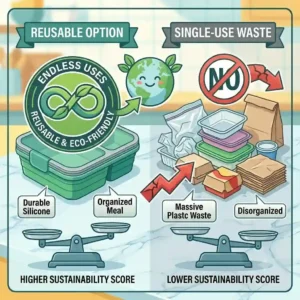
One criticism of silicone is that it isn’t readily recyclable in municipal curbside bins. This is true. However, the lifecycle of silicone is much longer than plastic. A cheap plastic container usually ends up in a landfill within 18 months because the lid snaps or the base warps. A high-quality silicone container can easily last a decade. You buy it once, keeping multiple plastic containers out of the waste stream over its lifespan.
🔬 Features That Actually Matter (And Those That Don’t)
When browsing Amazon, the marketing hype can get loud. Here is how to filter the noise and focus on what genuinely impacts your daily lunch experience.
✅ Feature That Matters: Pinch-Loc vs. Snap-Hinge Lids
If a product has hinges made of hard plastic clamped onto a silicone base, those hinges are the weak point. They will eventually break after a few thousand bends. Products like the Stasher bowls, which use a purely silicone pinch-seal, have no mechanical weak points. If longevity is your goal, avoid mechanical hinges.
❌ Feature That Doesn’t Matter: “Antibacterial” Coatings
Some brands claim their silicone has special antibacterial properties. This is mostly marketing fluff. Pure, non-porous platinum silicone is naturally resistant to microbial growth simply because bacteria have nowhere to harbor. You don’t need a special chemical coating; you just need to wash it properly with hot water.
✅ Feature That Matters: LFGB Certification
In the food storage world, the FDA sets the standard for the United States, but the European LFGB standard is much stricter. LFGB-certified silicone undergoes intensive testing to ensure absolutely no volatile compounds are transferred to food. If you see “LFGB Certified,” it usually means a cleaner, higher-quality product that won’t give off that initial chemical smell upon opening.
❌ Feature That Doesn’t Matter: 10+ Compartments
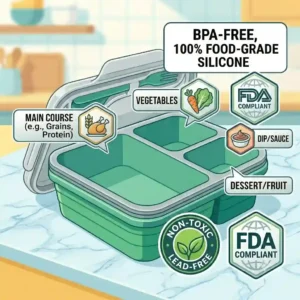
Unless you are a professional food stylist, bento boxes with six or seven tiny compartments are a nightmare to clean and difficult to pack realistically. Two to three larger compartments are significantly more practical for adult meals (think: main dish, side salad, small snack) and drastically cut down on dishwashing time.
📝 How to Choose the Perfect Silicone Lunch Box
If you are still on the fence, use this expert-driven checklist to nail down exactly what you need.
-
Assess Your Commute: Do you drive or take the train? If bag space is at a premium, instantly filter your search to collapsible models. If you drive and carry a dedicated lunch tote, prioritize thicker, rigid models or glass hybrids.
-
Determine Your Heat Source: Will you microwave this every day? If yes, avoid metal-hybrid bento boxes entirely and ensure the product explicitly states it is microwave-safe (and ideally features a vented lid).
-
Check the “Pinch Test” Rule: When assessing silicone quality, look at customer photos or test it yourself. If you pinch and twist the silicone and it turns white at the crease, it contains plastic fillers. 100% pure silicone will retain its solid color even when stretched.
-
Evaluate the Dishwashing Situation: Do you have a dishwasher, or do you hand-wash? Complex bento boxes with intricate lid grooves trap water and require meticulous hand-drying. If you hand-wash, look for smooth, seamless designs like round bowls.
-
Account for “Liquid Confidence”: Be honest about what you pack. If you pack sandwiches and dry salads, any push-top lid will do. If you pack pho, ramen, or heavy stews, you must look for models with vacuum-lock seals or heavy-duty snap clasps.
✨ Don’t Miss These Exclusive Deals!
🔍 Ready to revolutionize your lunch routine? Click on any highlighted product above to check current pricing and secure your new favorite meal prep companion.
🎯 Conclusion
The era of tolerating cracked, tomato-stained plastic containers is officially over. Upgrading to a premium silicone lunch box isn’t just an aesthetic choice; it’s an investment in your daily convenience, your health, and the environment.
Whether you opt for the robust, desk-friendly elegance of the Frego Glass and Silicone, the space-saving brilliance of the Thin Bins, or the toddler-proof reliability of the Austin Baby Collection, you are stepping into a vastly superior meal prep experience. Remember to treat your gear right—wash it with unscented soap, keep sharp knives away from the bottom, and don’t be afraid to utilize its massive thermal range. Your lunch hour deserves the upgrade.
❓ FAQs
❓ What is the difference between food-grade and platinum silicone?
✅ Food-grade silicone is safe for food contact but may be cured with peroxides, which can leave a slight odor. Platinum silicone is cured using platinum metal, resulting in a purer, clearer material with higher heat resistance and zero off-gassing…
❓ Can a silicone lunch box go in the oven?
✅ Yes, most 100% pure silicone containers are oven-safe up to 400°F (200°C) to 450°F. Always remove hard plastic snap-lids before baking. They are excellent for reheating casseroles or even baking single-serving cakes directly in the box…
❓ How long does a silicone lunch box last?
✅ With proper care, a high-quality silicone container can last 10 years or more. It does not degrade, crack, or become brittle over time like traditional plastic. The most common point of failure is user damage (e.g., cutting food inside it with a sharp knife)…
❓ Why does my silicone container taste like soap?
✅ Silicone is permeable to oil-based scents found in dish soap. To remove the taste, rub the container with lemon juice or bake the silicone (without plastic lids) at 250°F for 20 minutes to off-gas the trapped soapy oils…
❓ Are collapsible silicone lunch boxes leak-proof?
✅ It depends on the lid mechanism. Models with hard plastic snap-hinges and inner silicone gaskets are generally leak-proof. However, pure silicone press-fit lids on collapsible bowls can pop off if the bowl is squeezed too tightly…
📚 Recommended for You
- 5 Best Gray Lunch Box Picks for 2026 (Expert Field Tested)
- Silicone Dividers for Lunch Box: 7 Secret Weapons for Amazing Bento!
- 7 Best bento box silicone cups for Organized Healthy Lunches in 2026
Disclaimer: This article contains affiliate links. As an Amazon Associate, I earn from qualifying purchases. If you purchase products through these links, we may earn a small commission at no additional cost to you.
✨ Found this helpful? Share it with your friends! 💬🤗
[addtoany]
