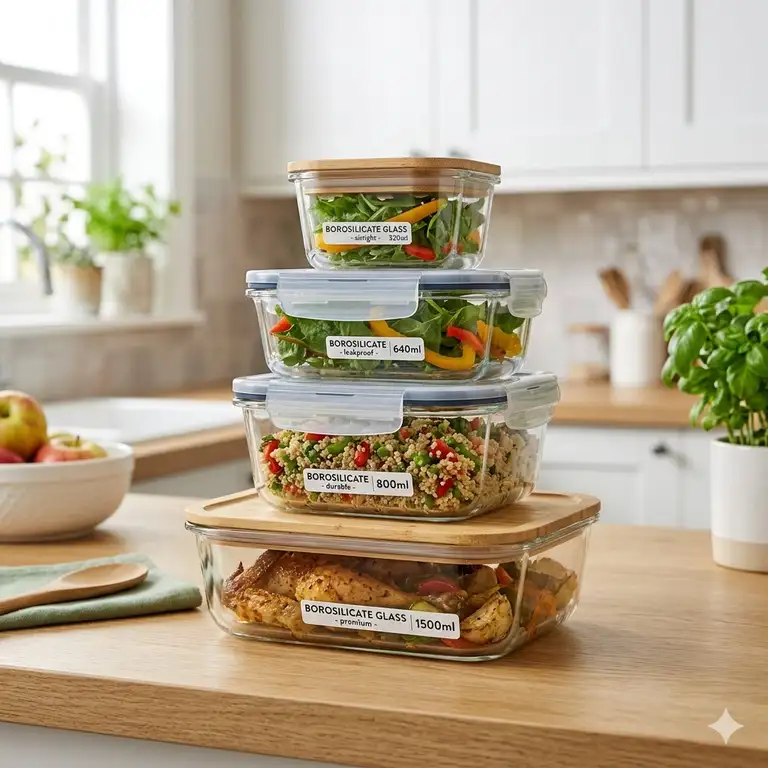
Kitchen trends in 2026 have shifted decisively toward “forever-ware”—products that prioritize health, sustainability, and extreme durability. At the heart of this movement are borosilicate food containers, the gold standard for anyone serious about meal prepping without the risks associated with plastic leaching or shattered glass. But what exactly makes this material superior?
What are borosilicate food containers?
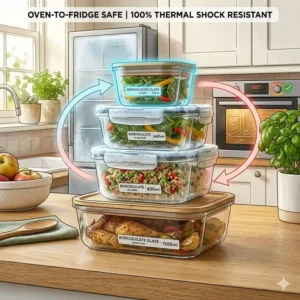
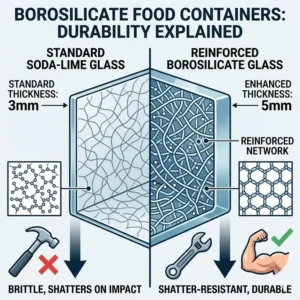
Borosilicate glass is a specialized type of glass that contains at least 5% boric oxide. This chemical composition allows the glass to resist “thermal shock,” meaning it can transition from extreme cold to intense heat without cracking. Unlike standard soda-lime glass, which is common in cheaper kitchenware, borosilicate can handle a temperature differential of about 170°C (340°F). In practical terms, this means you can take a lasagna from the freezer and put it directly into a preheated oven without an explosive disaster.
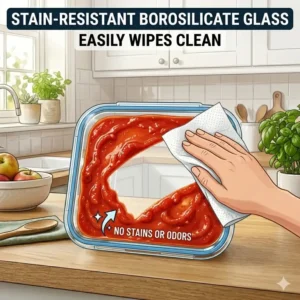
In an era where we are more conscious than ever about microplastics and chemical off-gassing, these containers offer a non-porous, BPA-free surface that won’t absorb food odors or stains. Whether you are a professional chef or a busy parent, understanding the science behind your storage is the first step toward a safer, more efficient kitchen. For more on the technical specifications of glass types, you can explore the ASTM International standards for laboratory and consumer glassware.
Quick Comparison: Top borosilicate food containers for 2026
| Brand & Model | Best Use Case | Lid Material | Price Range |
| Pyrex Ultimate Glass | Oven-to-Table | Stainless Steel/Silicone | Around $15 – $25 per unit |
| Glasslock Oven Safe | Leak-proof Commuting | BPA-Free Plastic Snap | $35 – $50 (Set of 6) |
| OXO Good Grips Glass | Stackable Pantry | Borosilicate/Silicone | Around $18 – $30 per unit |
| Bayco Glass Sets | Bulk Meal Prep | Plastic Locking | $40 – $60 (Set of 18-24) |
| Rubbermaid Brilliance | Visual Clarity | Crystal Clear Tritan/Glass | $30 – $45 (Set of 4) |
Expert Analysis of the Comparison Table
When analyzing these options, the primary trade-off is between lid security and material purity. The Pyrex Ultimate series is the winner for those wanting to avoid plastic entirely, as its lids use silicone and steel. However, if you are throwing a soup-filled container into a backpack for a commute, the mechanical snap-locks found on the Glasslock or Bayco models offer a physical security that press-fit lids simply cannot match. Budget-conscious buyers should look at the price-per-unit in sets, as the Bayco sets often bring the cost of borosilicate food containers down to under $5 per piece.
💬 Just one click — help others make better buying decisions too! 😊
[addtoany]
Top 5 borosilicate food containers: Expert Analysis
Choosing the right container isn’t just about the glass; it’s about how the vessel fits into your daily workflow. Below is a deep dive into the best performers for 2026.
1. Pyrex Ultimate Glass Food Storage (Oven-to-Table Specialist)
This model represents the pinnacle of “plastic-free” storage. While traditional Pyrex shifted to soda-lime glass years ago, the Pyrex Ultimate line utilizes high-quality borosilicate to satisfy professional-grade demands.
-
Key Specs: Oven safe up to 500°F; white silicone-rimmed glass lids; microwave and dishwasher safe.
-
Expert Commentary: What most buyers overlook is the lid design. Unlike plastic lids that warp over time in the dishwasher, these glass lids maintain their seal for years. In my experience, these are best for people who want to bake, serve, and store in a single dish. It reduces cleanup significantly and looks elegant on a dinner table.
-
Customer Feedback: Users consistently praise the aesthetic and the “heft” of the glass, though some note the lids aren’t 100% leak-proof if inverted.
-
Pros: Entirely non-toxic; extreme heat resistance; beautiful design.
-
Cons: Heavier than competitors; higher price point.
-
Price Range & Verdict: Expect to pay around $18-$25 per container. It’s a “buy once, cry once” investment for the health-conscious cook.
2. Glasslock Borosilicate Oven-Safe (The Commuter’s Choice)
Glasslock has long been a leader in the industry, and their 2026 borosilicate line focuses on a “locking” mechanism that is nearly impossible to accidentally open.
-
Key Specs: 4-hinge locking system; silicone gasket; thermal shock resistant glass base.
-
Expert Opinion: If you’ve ever had a container leak in your bag, you know the value of a mechanical lock. I recommend these for office workers and students. The spec sheet mentions the locking lids, but what it doesn’t say is that the hinges are reinforced with a double-pivot point in this year’s model, making them much less likely to snap off after repeated use.
-
Customer Feedback: Highly rated for its airtight seal; customers report that salad greens stay crisp for up to two days longer than in traditional plastic.
-
Pros: Truly leak-proof; very durable hinges; easy to stack.
-
Cons: Lids are BPA-free plastic (not glass); lids are not oven-safe.
-
Price Range & Verdict: Sets usually fall in the $35-$50 range. Best value for liquid-heavy meals.
3. OXO Good Grips Glass Food Storage (The Ergonomic Master)
OXO is known for “universal design,” and their borosilicate food containers are no exception. They prioritize ease of use for people of all ages.
-
Key Specs: Borosilicate body; snap-on lids with a removable silicone gasket for deep cleaning.
-
Expert Commentary: The standout feature here is the gasket. Most containers fail because mold grows under the seal. OXO designed this one to be easily pulled out and tossed in the dishwasher. In my view, this is the best option for families with kids or seniors who might struggle with stiff locking mechanisms.
-
Customer Feedback: Reviewers love the clarity of the glass and the fact that the lids are interchangeable across various sizes in the set.
-
Pros: Superior hygiene; easy-to-use tabs; high thermal resistance.
-
Cons: Bulky lid design takes up more vertical fridge space.
-
Price Range & Verdict: Around $20 for individual large containers. Ideal for those who prioritize cleanliness and ease of handling.
4. Bayco Glass Food Storage Containers (The Meal Prep King)
For those who cook 20 meals on a Sunday, Bayco offers the most cost-effective way to get high-quality borosilicate into your kitchen in bulk.
-
Key Specs: Multiple sizes (rectangular, square, round); locking plastic lids; temperature range from -4°F to 750°F.
-
Expert Opinion: You might assume a “budget” brand cuts corners on the glass, but these are genuine borosilicate. The cost saving comes from the simpler lid construction. What you should know is that while the glass is oven-safe to 750°F, you should never exceed 400°F for long periods to ensure longevity. This is the “Best Buy” for anyone transitioning an entire kitchen from plastic to glass.
-
Customer Feedback: Buyers are often surprised by the quantity they get for the price; excellent for portion control.
-
Pros: Incredible value; wide variety of shapes; sturdy glass.
-
Cons: Lids can be difficult to snap on when the container is overfilled.
-
Price Range & Verdict: Large sets (18+ pieces) are usually around $45-$60. Perfect for the dedicated fitness enthusiast or large family.
5. Rubbermaid Brilliance Glass (The High-Tech Hybrid)
The Brilliance line is famous for its crystal-clear look, and the glass version combines that aesthetic with the durability of borosilicate.
-
Key Specs: “Vented” lids for splatter-free microwaving; 100% leak-proof seal; modular stacking design.
-
Expert Commentary: The vented lids are a game-changer. Most glass containers require you to offset the lid in the microwave, which leads to dried-out food or messy splatters. These allow steam to escape while the lid stays locked. I suggest these for anyone who frequently reheats leftovers at work.
-
Customer Feedback: Users love that they “look like glass but perform like high-end tech”; very popular for organized “Pinterest-style” fridges.
-
Pros: Best microwaving experience; sleek look; space-saving.
-
Cons: The latches feel a bit more delicate than the Glasslock hinges.
-
Price Range & Verdict: Sets of 4 are around $35-$45. The best choice for aesthetic-focused organizers.
✨ Don’t Miss These Exclusive Deals!
🔍 Ready to make the switch? These top-rated borosilicate food containers are currently the favorites among professional organizers and home cooks alike. Click any link to see the latest bundle deals and start your journey toward a plastic-free kitchen today!
Practical Usage & Maintenance Guide: Maximizing Your Investment
Owning borosilicate food containers is one thing; maintaining them so they last a decade is another. While these are “tough” glasses, they are not invincible.
The “Oven-to-Table” Safety Protocol
The most common mistake people make is placing a cold glass container onto a wet or cold surface after taking it out of the oven. Even though borosilicate handles thermal shock better than soda-lime, the “point of contact” stress can still cause a fracture.
-
Always use a trivet: Use a wooden or silicone mat, never a cold granite countertop.
-
Avoid the broiler: Most borosilicate is rated for 450°F-500°F. The broiler can hit 550°F+, which exceeds the safety rating of many consumer-grade brands.
-
Check for “Flecks”: Before putting a container in the oven, ensure there are no small chips on the rim. A chip is a stress concentrator that can lead to a full break under heat.
Cleaning and Longevity
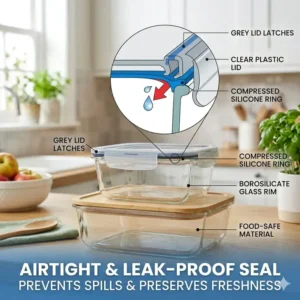
To keep your glass looking “brand new” in 2026, avoid abrasive steel wool. Over time, scratches can cloud the glass and weaken its structure. If you have baked-on grease, soak the container in a mixture of baking soda and warm water for 30 minutes. The residue will wipe right off. For the lids, especially those with silicone gaskets, a monthly soak in vinegar-water will kill any lingering bacteria that the dishwasher might miss.
The Meal Prepper’s Decision Framework: Which One Should You Buy?
If you’re staring at the options and can’t decide, use this simple “If/Then” logic to find your perfect match.
The “Office Commuter” Profile
-
Primary Need: No leaks, microwave-ready.
-
Best Choice: Rubbermaid Brilliance Glass.
-
Reasoning: The vented lids mean you don’t have to hunt for a paper towel to cover your food in the breakroom, and the seals are the most reliable for transport.
The “Health Purist” Profile
-
Primary Need: Zero plastic contact, oven-safe.
-
Best Choice: Pyrex Ultimate Glass.
-
Reasoning: Since the lids are glass and silicone, your food never touches plastic, even during storage. This is the gold standard for avoiding endocrine disruptors.
The “Bulk Planner” Profile
-
Primary Need: Volume, affordability, stacking.
-
Best Choice: Bayco Glass Set.
-
Reasoning: When you need 10 identical containers for a week’s worth of lunches, you need a high count at a low price without sacrificing the thermal benefits of borosilicate.
Borosilicate vs. Soda-Lime Glass: The Science of Safety
You might see “Glass Food Storage” at a dollar store and wonder why you should pay triple for borosilicate food containers. The difference is found at the molecular level. Standard soda-lime glass is made of sand, soda ash, and limestone. It’s cheap and great for windows or pickle jars, but it expands significantly when heated.
Borosilicate glass adds boron trioxide to the mix. This lowers the “coefficient of thermal expansion.” According to the FDA’s guidelines on food contact substances, glass is generally recognized as safe (GRAS), but not all glass is equal in terms of durability. If you drop a soda-lime container, it often shatters into dangerous, jagged shards. Borosilicate tends to crack into larger, less “explosive” pieces, though it is still glass and should be handled with care.
In 2026, the ROI on borosilicate is clear: it lasts 5-10 years longer than soda-lime in a high-heat kitchen environment. The cost-per-use eventually drops to pennies, making it the more economical choice in the long run.
Common Mistakes When Buying Glass Containers
In my years of reviewing kitchenware, I’ve seen three recurring mistakes that cost consumers money:
-
Ignoring Lid Replacements: Many people buy a set and then throw the whole thing away when a lid breaks. Before buying, check if the brand sells replacement lids. Brands like Pyrex and OXO are excellent for this, whereas “no-name” Amazon brands often require you to buy a whole new set.
-
Assuming All Glass is Oven-Safe: “Glass” does not mean “Oven-Safe.” Always look for the specific “Borosilicate” label. If the packaging just says “tempered glass,” it is likely soda-lime and can only handle moderate temperature changes.
-
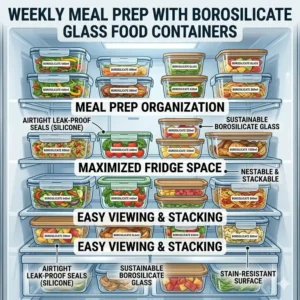
Over-Estimating Capacity: Glass is thicker than plastic. A 3-cup glass container takes up significantly more shelf space than a 3-cup plastic one. Always measure your fridge shelves before committing to a 24-piece set.
Features That Actually Matter (And Those That Don’t)
Marketing in 2026 is full of buzzwords like “Diamond-Tough” or “Nano-Coated.” Here is what actually impacts your daily life:
-
Removable Gaskets: DO MATTER. If you can’t remove the rubber seal, you will eventually have a mold problem.
-
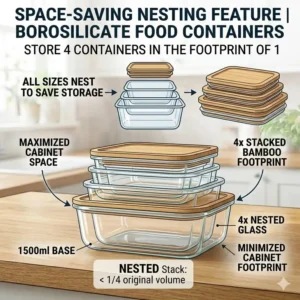
Nesting Design: DOES MATTER. If the containers don’t fit inside each other, they will take up your entire cabinet. Look for “nested sets.”
-
Airtight vs. Watertight: KNOW THE DIFFERENCE. An airtight container is good for dry goods (crackers). A watertight container is required for liquids (stews). Always aim for watertight for food storage.
-
“Designer” Colors: DON’T MATTER. Within two years, those trendy colored lids often fade or stain. Stick to clear, white, or grey for longevity.
Long-Term ROI: Why Glass Beats Plastic Every Time
Let’s do the math for a typical 2026 household.
-
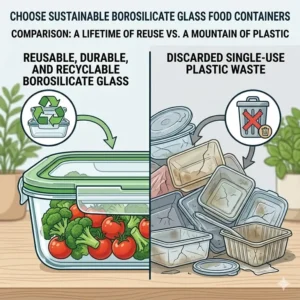
Plastic: A 10-piece plastic set costs around $15. Due to staining, warping, and health concerns, most families replace them every 18 months. Over 10 years, you spend $100.
-
Borosilicate: A high-quality set costs around $45. With proper care, it lasts 10+ years.
Beyond the $55 savings, you’re also keeping roughly 70 plastic containers out of landfills. For those following the United Nations Sustainable Development Goals, switching to borosilicate is a small but tangible way to reduce your domestic plastic footprint.
Safety and Compliance Guide
When shopping for borosilicate food containers in 2026, look for the following certifications on the packaging:
-
LFGB Certified: This is a stricter European standard for food-grade materials that many high-end brands now follow globally.
-
SGS Tested: Ensures the glass is lead-free and cadmium-free.
-
Thermal Shock Rating: Look for a rating of at least 120°C (248°F) for basic safety, though 170°C is preferred.
Always ensure the manufacturer explicitly states “Lead-Free.” While glass is naturally non-toxic, some cheaper pigments used in lid logos or glass tints in the past contained trace heavy metals. Modern 2026 standards have largely eliminated this, but it’s always worth a quick check on the brand’s “About” page.
✨ Don’t Miss These Exclusive Deals!
🔍 Ready to make the switch? These top-rated borosilicate food containers are currently the favorites among professional organizers and home cooks alike. Click any link to see the latest bundle deals and start your journey toward a plastic-free kitchen today!
Conclusion
Switching to borosilicate food containers is one of the most impactful upgrades you can make for your kitchen in 2026. Not only do you gain the convenience of oven-to-table cooking, but you also invest in a product that protects your health and the environment. Whether you choose the high-tech vents of the Rubbermaid Brilliance or the pure glass experience of the Pyrex Ultimate, you are choosing quality over convenience. Remember to prioritize containers with removable gaskets and verified thermal shock ratings to ensure your investment lasts for years to come.
FAQs
❓ Are borosilicate food containers completely shatterproof?
✅ No, they are still glass. While borosilicate is more resistant to thermal shock and more durable than standard glass, it can still break if dropped on a hard surface like tile or concrete. It is “shatter-resistant” compared to untreated glass…
❓ Can I put the lids in the oven?
✅ Almost never. Most lids are made of plastic or silicone. Even “oven-safe” silicone lids usually have a lower temperature limit (around 400°F) than the glass itself. Always remove the lids before baking or roasting…
❓ Why is my borosilicate glass cloudy?
✅ This is usually “etching” caused by harsh dishwasher detergents or hard water minerals. To fix it, soak the container in white vinegar for 15 minutes. If it doesn’t come off, it may be permanent surface wear from abrasive cleaners…
❓ Can these containers go from the freezer to the microwave?
✅ Yes, that is the primary benefit of borosilicate. However, for maximum safety, it’s best to let the container sit on the counter for 2 minutes or run the bottom under lukewarm water to “soften” the extreme temperature jump…
❓ Do borosilicate food containers contain lead?
✅ High-quality brands are strictly lead-free. Borosilicate is a “Type 1” neutral glass, making it one of the safest materials for food storage. Always buy from reputable brands to ensure compliance with modern safety standards…
Recommended for You
- 7 Best Rectangular Glass Food Containers of 2026: The Ultimate Guide
- 8 oz freezer containers: 7 Best Durable Picks for Easy Meal Prep
- 7 Best plastic free food storage containers for a Greener Kitchen 2026
Disclaimer: This article contains affiliate links. As an Amazon Associate, I earn from qualifying purchases. If you purchase products through these links, we may earn a small commission at no additional cost to you.
✨ Found this helpful? Share it with your friends! 💬🤗
[addtoany]
